
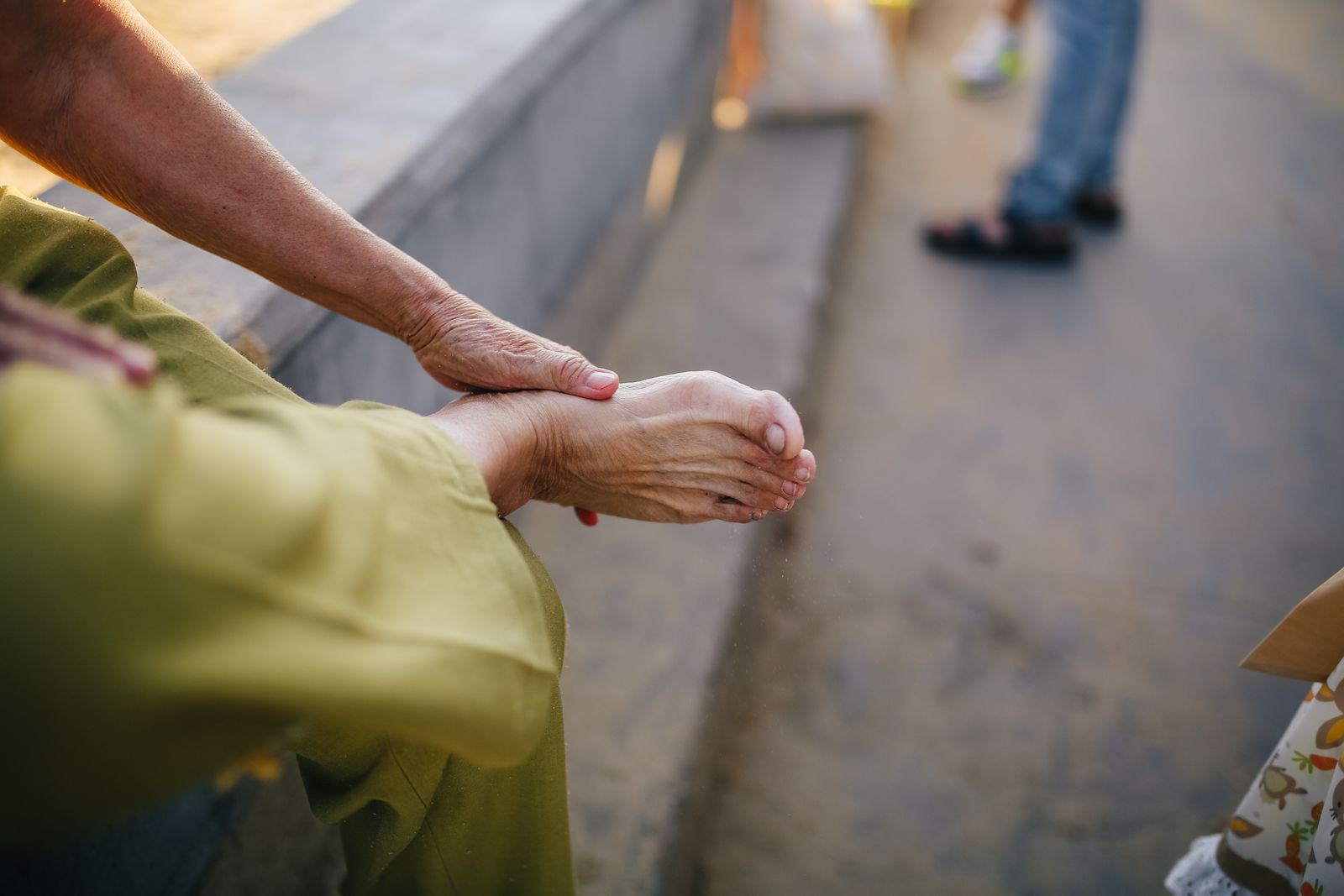
Feet are easy to ignore. They are far from our eyes, often tucked into socks and slippers, and rarely complain until something is already wrong. Yet for many seniors, a few quiet minutes of foot care each day is one of the highest-value health routines there is. A small problem caught early, like a blister or a dry crack, is easy to manage. The same problem missed can turn into an infection, a wound that will not heal, or a fall. The good news is that good foot care is simple, and you can build most of it into a habit you already have.
Why feet matter more as we age
With age, skin becomes thinner and drier, circulation slows, and sensation can fade, so a sore spot or a stone in a shoe may go unnoticed. Balance changes too, which means healthy, comfortable feet are part of staying steady and independent. Looking after them is not vanity. It is fall prevention, infection prevention, and mobility all at once. A senior who is confident and comfortable on their feet is more likely to stay active, and staying active protects strength, mood, and independence in turn.
A simple daily check
Aim to inspect the feet once a day, perhaps in the evening when shoes come off. It takes about a minute.
- Look all over. Check the tops, soles, heels, and especially between the toes for redness, blisters, cuts, swelling, or changes in colour. A hand mirror or a helping hand makes the soles easier to see.
- Wash and dry gently. Use warm, not hot, water, and dry carefully between the toes, where moisture can lead to infection.
- Moisturize, but not between the toes. A little cream on dry heels and soles keeps skin from cracking; leave the spaces between toes dry.
- Mind the nails. Trim straight across to avoid ingrown nails. If nails are thick or hard to reach, a foot-care nurse can help.
- Check the shoes. Well-fitting, supportive footwear and clean, seam-free socks prevent many problems before they start.
Extra care with diabetes or poor circulation
If your loved one has diabetes or reduced circulation, foot care moves from helpful to essential. High blood sugar can dull sensation, so a wound may form without any pain to warn of it, and slower circulation means cuts heal more slowly and are more likely to become infected. For these families, the daily check is not optional, and bare feet, hot water bottles, and heating pads are best avoided because burns can go unfelt. It also helps to test bath water with an elbow rather than a foot, and to have someone else look over the soles regularly if bending or eyesight makes self-checks difficult.
Warning signs to take seriously
Contact a nurse or physician promptly if you notice any of the following:
- A cut, blister, or sore that is not healing, or any sign of infection such as warmth, swelling, pus, or a bad smell.
- Redness, dark or blue-tinged skin, or a foot that feels cold or looks pale.
- New numbness, tingling, burning, or pain in the feet.
- An ingrown toenail, a corn, or a callus that is becoming painful.
When something is clearly infected, spreading, or very painful, do not wait. Seek medical care the same day.
None of this needs to fall on family alone. Our Registered Nurses provide gentle in-home foot care and can teach you a routine that fits your household. If you would like a hand getting started, we are happy to arrange a free assessment and talk through what would help most.