
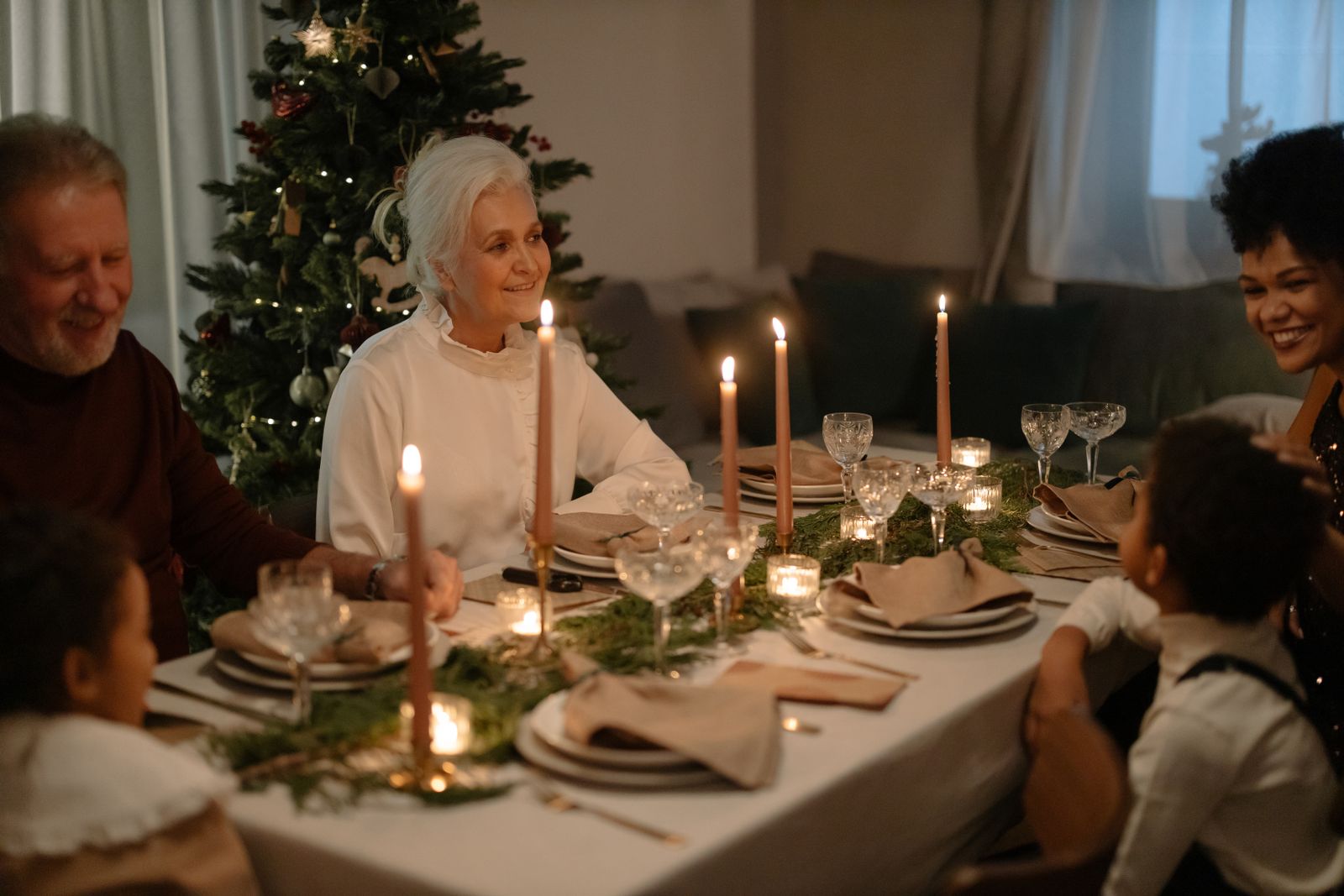
The holidays are built on the very things that dementia makes harder: crowded rooms, changed routines, late nights, and a swirl of noise, food, and faces. It is no wonder that festive gatherings, meant to be joyful, can leave a person with dementia overwhelmed and a caregiver exhausted. The season can still be warm and meaningful. It simply asks for a little planning, a few gentle scripts for the family, and permission to do things differently than you used to. Letting go of how the holidays "always" looked is often the first and kindest step. Here is how to make the day feel like a gift rather than a test, for your loved one and for you.
Guard against overstimulation
For someone with dementia, a lively holiday party can be a wall of sound and movement that is hard to process. The aim is celebration without overload.
- Think smaller and shorter. A few loved ones over two hours is far kinder than a full house all day. People can visit in waves rather than all at once.
- Turn down the background. Music, the television, and several conversations at once blur together. Lower the volume, or keep music soft and familiar.
- Create a quiet retreat. Set aside a calm, familiar room where your loved one can step away for a rest. Let them know it is there, and check on them quietly rather than pulling them back into the crowd.
- Watch for early signs. Fidgeting, repeated questions, or a worried look often come before real distress. That is the moment for a break, not the moment to push through.
- Give a real role. Feeling useful is soothing. A simple, familiar job such as folding napkins, stirring a pot, or arranging cookies on a plate offers connection without the pressure of keeping up with fast conversation.
Respect timing and routine
Familiar rhythms are steadying, and the holidays tend to upend them. You can bend a routine without breaking it.
- Plan for their best hours. Many people with dementia are calmest and clearest earlier in the day. A late-morning or lunchtime gathering may go far better than a long evening one, which can collide with sundowning.
- Keep anchors in place. Try to protect regular meal times, medications, and rest, even on a busy day. Hunger and fatigue turn a manageable moment into a hard one.
- Do not over-schedule. One event in a day is plenty. Build in downtime before and after so the day does not become a marathon.
Prepare the family with gentle scripts
Relatives who visit rarely may not know what to expect, and their reactions, however loving, can add stress. A quiet word beforehand helps everyone.
- Set expectations kindly. Let guests know your loved one may not remember names or recent events, and that this is the illness, not a lack of love. Ask them not to test with "Do you remember me?"
- Offer opening lines. Suggest guests introduce themselves warmly: "Hi Mom, it’s Sarah, your niece. It’s so good to see you." A name and a relationship take away the pressure to remember.
- Go with their reality. If your loved one speaks of someone long gone as if they are alive, it is kinder to join the feeling than to correct the fact. "You really miss him, don’t you?" comforts; "He passed years ago" wounds.
- Approach calmly and one at a time. Ask guests to come from the front, at eye level, and to avoid crowding around all at once.
- Follow their lead in conversation. Encourage guests to talk about long-ago memories, which are often easier to reach than recent ones, and to listen without rushing to fill silences or finish sentences.
A short note or group text a day or two ahead of the gathering can prepare everyone gently, so no one is caught off guard and your loved one is met with patience rather than surprise.
Tweak the environment
Small changes to the room can prevent many difficult moments.
- Keep decorations gentle. Flashing lights and very busy displays can confuse or agitate. Warm, steady lighting is easier to take in.
- Mind the tripping hazards. Extension cords, gift wrap on the floor, and rearranged furniture all raise the risk of a fall. Keep walkways clear and familiar.
- Avoid risky decorations. Realistic artificial fruit or scented items can be mistaken for food. Choose simple, safe decor.
- Lean on the familiar. Favourite carols, a well-loved dish, or old photographs can spark comfort and connection when new activities fall flat.
- Keep serving simple and safe. Offer smaller portions, foods that are easy to manage, and gentle help if needed, and stay nearby at the table in case swallowing or utensils become tricky.
Give the caregiver a real break
Holidays are heaviest on the primary caregiver, who is often hosting, cooking, and keeping constant watch all at once. Your own rest is not a luxury; it is what makes the day possible.
- Share the load. Assign a trusted relative to keep a gentle eye on your loved one for a stretch so you can sit down, eat, and simply enjoy the room.
- Lower the bar. A simpler meal and fewer traditions are a fair trade for a calmer, more present day. Perfection is not the goal; connection is.
- Consider extra support. A few hours of professional respite care over the season can let you attend an event, or rest, knowing your loved one is safe and cared for.
- Accept help when it is offered. When a relative asks what they can bring or do, give them a real answer, whether it is a dish, the dishes, or an hour of company, so the work does not quietly land on you alone.
Above all, measure success by moments, not the whole day. A shared song, an easy laugh, a quiet hand held at the table: these are the memories worth keeping, and they do not require a flawless celebration. If you would like support through the season, our Registered Nurses at Holy Home HealthCare Services are glad to help, and we welcome you to reach out for a free, no-pressure assessment.